

What is a thermal mass flow meter? What is the working principle of a thermal mass flow meter?
Release time:
09 May,2022
Summary
With the increasing level of industrial automation, many methods that people relied on in the past have gradually been replaced by various advanced devices. For example, advanced technologies from around the world are brought to us through telephones, data exchange networks, and the Internet, bringing great convenience to people's work and production. Thermal mass flow meter is one of them.
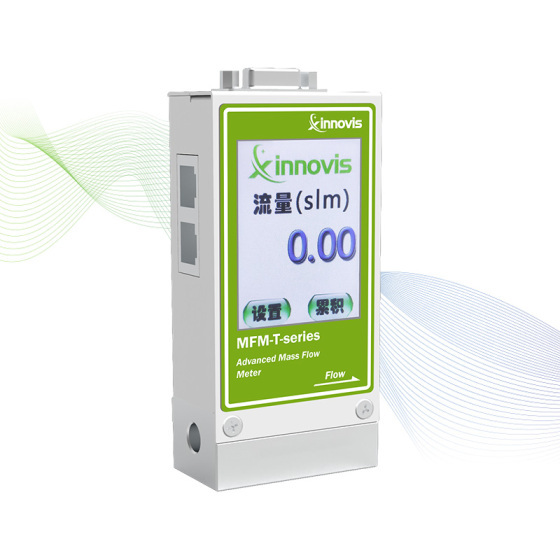
A thermal mass flow meter is an instrument for measuring the flow of liquids. It is widely used due to its simple structure and low cost. It has two major advantages: good repeatability and high pressure resistance. Thermal mass flow meter The main differences compared to other gas flow sensors are:
1. Under the same temperature conditions, the device does not require a cooling medium;
2. Easy installation, no need for additional pipelines and electronic systems;
3. Instantaneous flow rate (or cumulative total) can be directly read;
4. Thermal mass flow meter Gas can be transported over long distances and has strong environmental adaptability, making centralized gas supply easy to achieve.
The working principle of a thermal mass flow meter is based on the Carnot cycle law. One of the two branches of the thermocouple is a high-temperature zone, while the other end is usually in contact with a low-temperature area to form a cold line (or "measuring point"); when the substance flowing through the thermocouple enters the detector, it will change due to heating, thereby causing a change in the output signal on the sensor. In a sealed pipeline, there is a mixture of saturated steam (or air) measured under two or more different temperatures and pressures. When a third type of fluid is introduced, a phase change occurs and is transported to the other end far from the valve outlet; in this way; the liquid circulates along the guide pipe connected to the atmosphere.
More News

Tel: 400 006 6550
Office Address: 12. Stock, Gebäude I, Internationaler Innovationspark, Nr. 177 Songling Road, Laoshan District, Qingdao