

Features of hydrogen flow meter measurement, come and collect it!
Release time:
25 May,2023
Summary
What are the characteristics of a hydrogen flow meter? Let's analyze it together briefly.
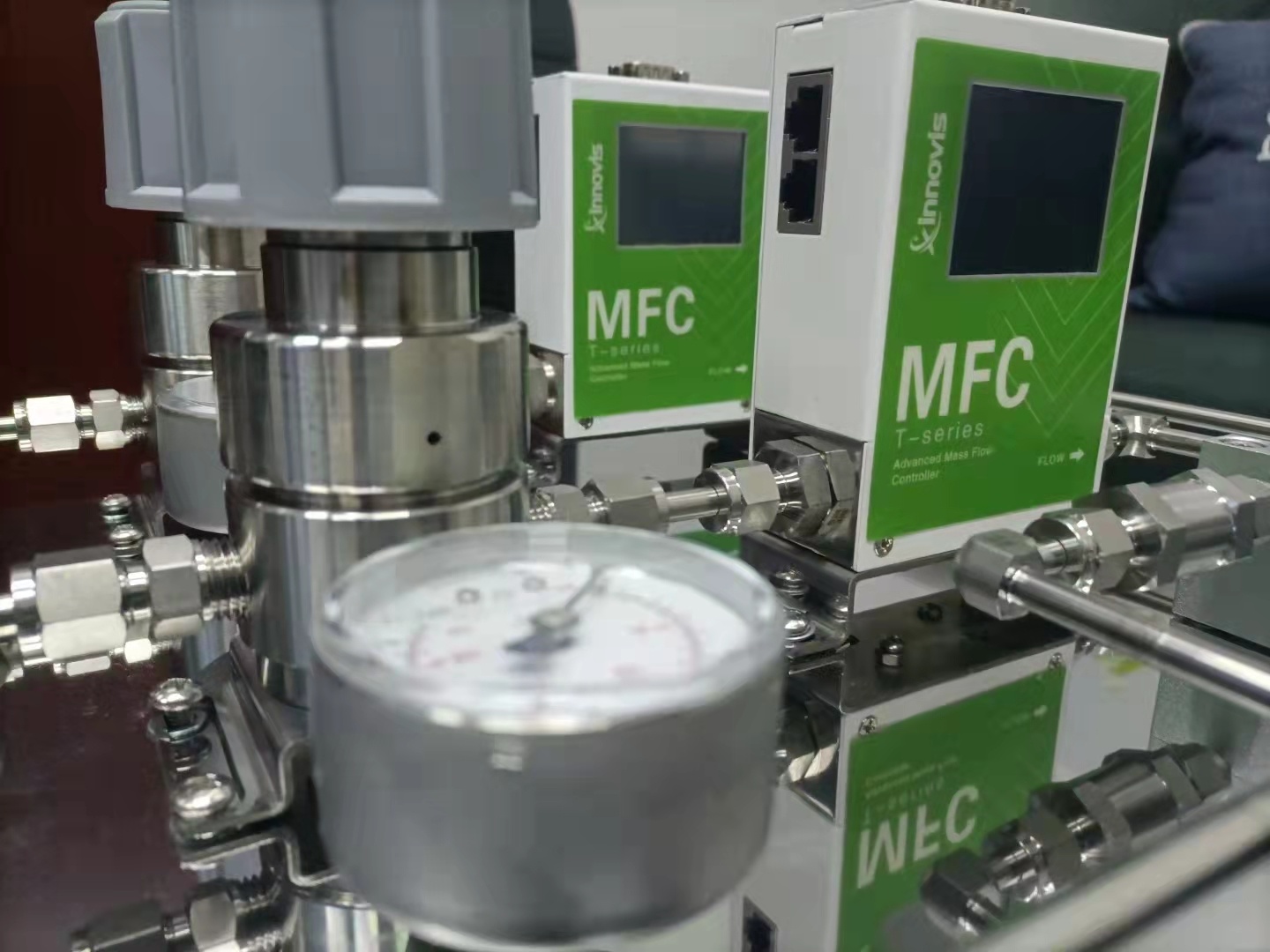
High precision: The hydrogen flow meter has a high-precision flow measurement capability, capable of measuring flow ranges from tiny quantities to large flow ranges, with measurement accuracy reaching 0.5%. High sensitivity: The hydrogen flow meter can measure tiny flows as low as 0.01 sccm, as well as higher flow ranges, with good sensitivity and dynamic responsiveness.
Long lifespan: Because of the smaller liquid density, the hydrogen flow meter can be used for a long time and is not easily worn or damaged. Simple structure: The hydrogen flow meter has a simple structure, is easy to install and maintain, and can be used in high-pressure, high-temperature, and other harsh environments. Multifunctional: The hydrogen flow meter has multiple functions such as manual adjustment, digital voltage signal output, and alarm, facilitating real-time monitoring and control of gas flow.
Principle of hydrogen flow meter measurement:
The principle of the hydrogen flow meter is to use a thermal sensor to measure hydrogen. When hydrogen passes through the probe of the hydrogen flow meter, it causes a change in the temperature of the thermal sensor, and this change is detected to measure the flow of hydrogen.
The probe of the hydrogen flow meter contains a thermal sensor, which is usually composed of a miniature metal filament. Its resistance changes with temperature, so the flow of hydrogen can be measured by measuring the resistance of the thermal sensor.
When hydrogen passes through the probe, the resistance in the thermal sensor changes with the change in temperature. Since the temperature of the thermal sensor is proportional to the hydrogen flow rate, the hydrogen flow rate can be calculated by measuring the change in the resistance of the thermal sensor. Generally, the temperature regulation range of the thermal sensor is between 30-70 ℃.
The hydrogen flow meter uses a sensor to monitor the hydrogen flow rate. The sensor usually consists of a pressure-sensitive resistor, a pressure sensor, a gas temperature sensor, and a flow sensor. When hydrogen passes through the probe, the sensor monitors the pressure, temperature, and flow rate of the hydrogen in real time, and then feeds the data back to the control system.
The control system uses the feedback data for calculation and analysis, and adjusts the hydrogen flow rate to ensure the stability and accuracy of the hydrogen flow rate. Generally, the hydrogen flow meter has multiple measurement ranges and output signals to meet the needs of different occasions.
The hydrogen flow meter has the characteristics of high precision, high sensitivity, long lifespan, simple structure, and multiple functions. Its measurement principle mainly uses thermal sensors and sensors to monitor and measure hydrogen, and the control system adjusts the hydrogen flow rate. Hydrogen flow meters are widely used in various industries such as semiconductors, chemicals, and manufacturing. When using a hydrogen flow meter, pay attention to correct use, installation, and maintenance to ensure its high accuracy and long lifespan.
More News

Tel: 400 006 6550
Office Address: 12. Stock, Gebäude I, Internationaler Innovationspark, Nr. 177 Songling Road, Laoshan District, Qingdao