

Introduction to the principle of Shandong miniature thermal mass flow meter, come and collect it!
Release time:
03 Feb,2023
Summary
The Shandong miniature thermal mass flow meter measures fluid mass flow rate by utilizing the changes in the temperature field generated when the working fluid flows through a pipe heated by an external heat source, or by utilizing the relationship between the energy required for the fluid temperature to rise to a certain value when heating the fluid and the fluid mass to measure the fluid mass flow rate. It is a type of flow meter.
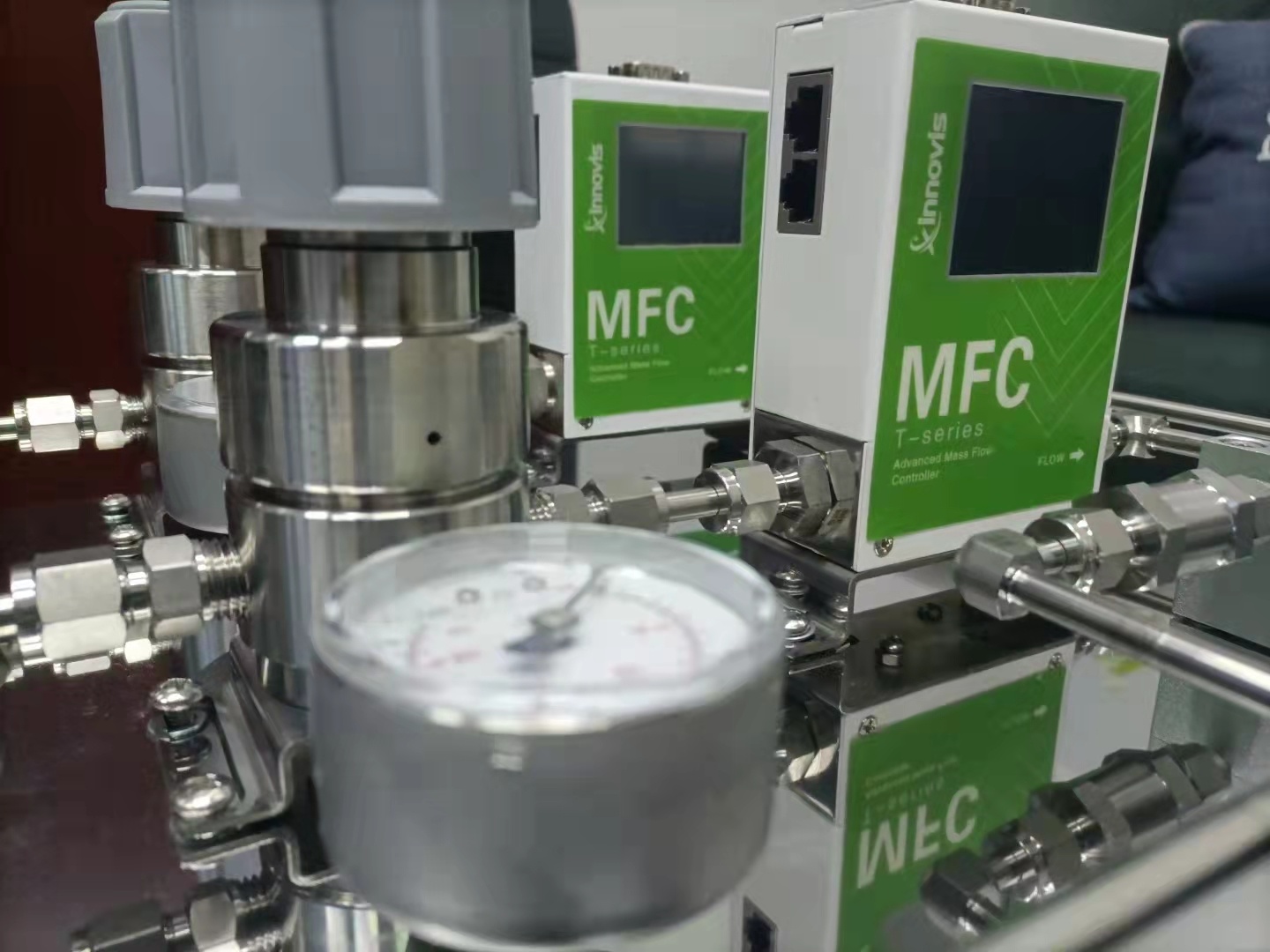
In China, the Shandong miniature thermal mass flow meter is commonly known as a calorimetric flow meter. It measures fluid mass flow rate by utilizing the changes in the temperature field generated when the fluid flows through a pipe heated by an external heat source, or by utilizing the relationship between the energy required for the fluid temperature to rise to a certain value and the fluid mass to measure the fluid mass flow rate. It is a type of flow meter, typically used for measuring the mass flow rate of gases. It features low pressure loss; a wide flow range; high accuracy, high repeatability, and high reliability; a design with no moving parts; and the ability to monitor and control very low gas flow rates. Using the change in heat (or temperature) of the heated fluid to measure the mass flow rate of the fluid has a long history. Early TMFs directly placed heating coils and temperature sensing elements into the fluid for direct contact, a type of contact flow meter. However, the inability to effectively address issues such as erosion and wear, as well as explosion prevention, greatly limited its industrial applications. The Thomas flow meter is representative of this type of flow meter, mainly used to measure the mass flow rate of larger gas flows. In the 1950s, a non-contact boundary layer flow meter was proposed, overcoming the shortcomings of contact flow meters, but the measurement results are easily affected by medium parameters (such as thermal conductivity, specific heat capacity, viscosity, etc.), and can be used to measure larger liquid flows. By the 1970s, the thermal distribution type TMF, based on measuring the fluid temperature distribution, has developed rapidly at home and abroad due to its unique advantages, used to measure the minute flow of gases. With the development of technology, and after redesigning the flow meter structure, based on the contact flow meter, an immersion type TMF was proposed and has also developed rapidly, which can be used to measure the gas flow rate of larger diameter pipes. In summary, TMF is a direct mass flow meter mainly used to measure gas mass flow rate.
A Shandong miniature thermal mass flow meter is a flow meter that detects flow rate based on the principle of heat transfer; that is, it measures flow rate based on the heat exchange relationship between the fluid and the heat source (an object heated in the fluid or a heating element outside the measuring tube).
What is the principle of the Shandong miniature thermal mass flow meter? The Shandong miniature thermal mass flow meter measures gas flow rate by measuring the cooling effect when gas flows through the heating element inside the flow meter. There are two thermal resistance elements in the measuring section through which the gas passes; one detects temperature, and the other acts as a heater. The temperature sensing element senses the temperature of the gas, and the heater maintains a constant temperature difference between its temperature and the temperature of the measured gas by changing the current. When the gas flow rate increases, the cooling effect increases, and the current required to maintain a constant temperature between the thermistors also increases. The amount of heat transfer is proportional to the gas mass flow rate; that is, the supplied current and the gas mass flow rate have a corresponding effect on the gas flow rate.
More News

Tel: 400 006 6550
Office Address: 12F, Building I, International Innovation Park,
177 Songling Road, Laoshan District, Qingdao, Shandong, China