

What kinds of vacuum gauges do you know?
Release time:
30 May,2024
Summary
Types of Vacuum Gauges
Vacuum gauges used in vacuum coating machines include resistance vacuum gauges, thermocouple vacuum gauges, and ionization vacuum gauges. Below is a brief introduction to the working principles and characteristics of these vacuum gauges:
Resistance Vacuum Gauge
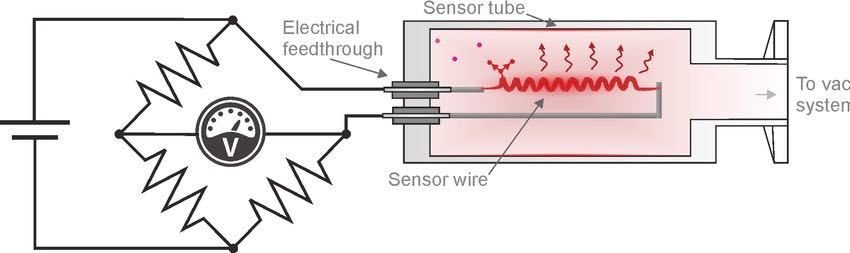
A resistance vacuum gauge is a thermal conductivity vacuum gauge that indirectly obtains the degree of vacuum by measuring the temperature of the hot wire. It utilizes the principle that the thermal conductivity of gas at low pressure is related to pressure. The structure of a resistance vacuum gauge includes a heating filament (usually tungsten wire or platinum wire) and a hot wire with a large temperature coefficient of resistance. Under constant heating current conditions, when the pressure of the vacuum system decreases, the resistance value of the hot wire increases, which can indirectly determine the magnitude of the pressure.
Thermocouple Vacuum Gauge
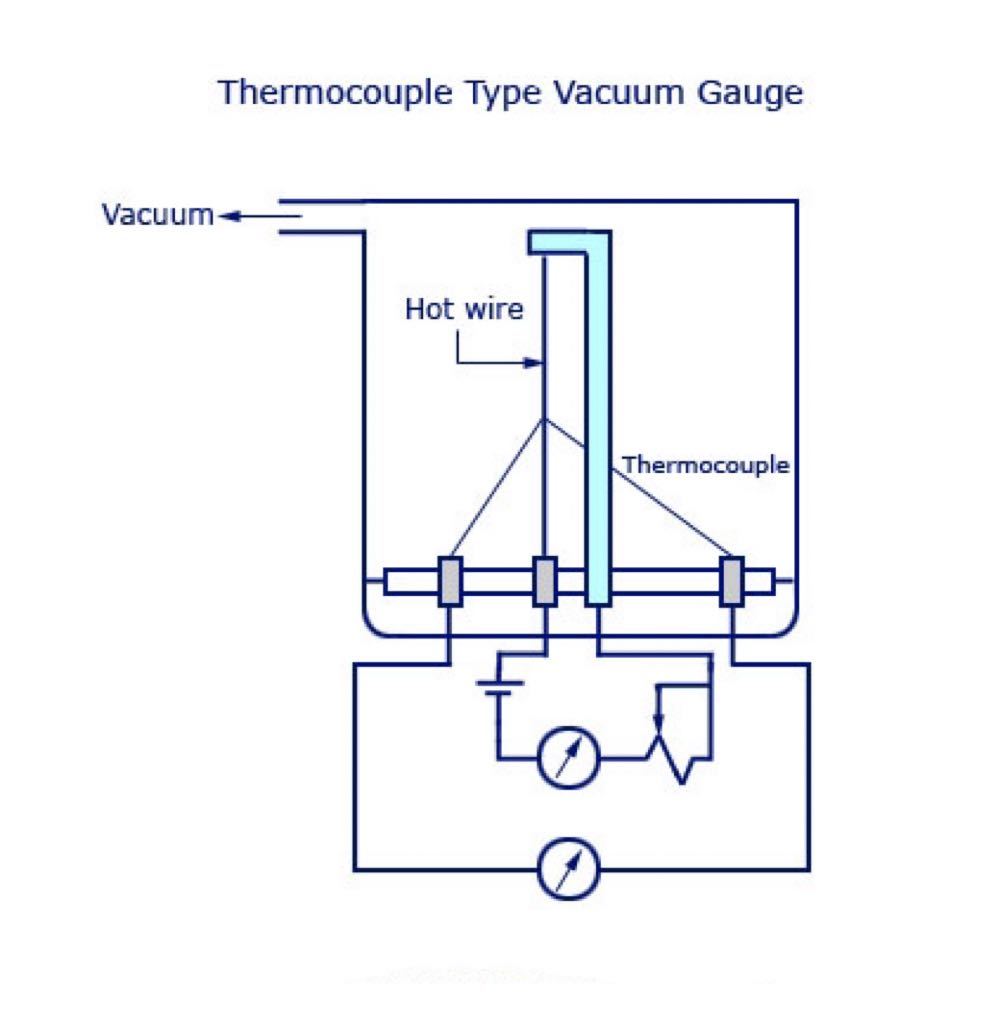
A thermocouple vacuum gauge consists of a heating filament and a thermocouple. The thermocouple is usually made of platinum-rhodium or Constantan-nickel chromium. The thermocouple vacuum gauge uses the temperature change of the thermocouple to measure the change in pressure. When the pressure of the gas decreases, the temperature of the thermocouple junction increases with the increase in the temperature of the hot wire, and thus the electromotive force of the thermocouple also increases. By measuring the change in the electromotive force of the thermocouple, the magnitude of the vacuum can be indirectly determined.
Ionization Vacuum Gauge
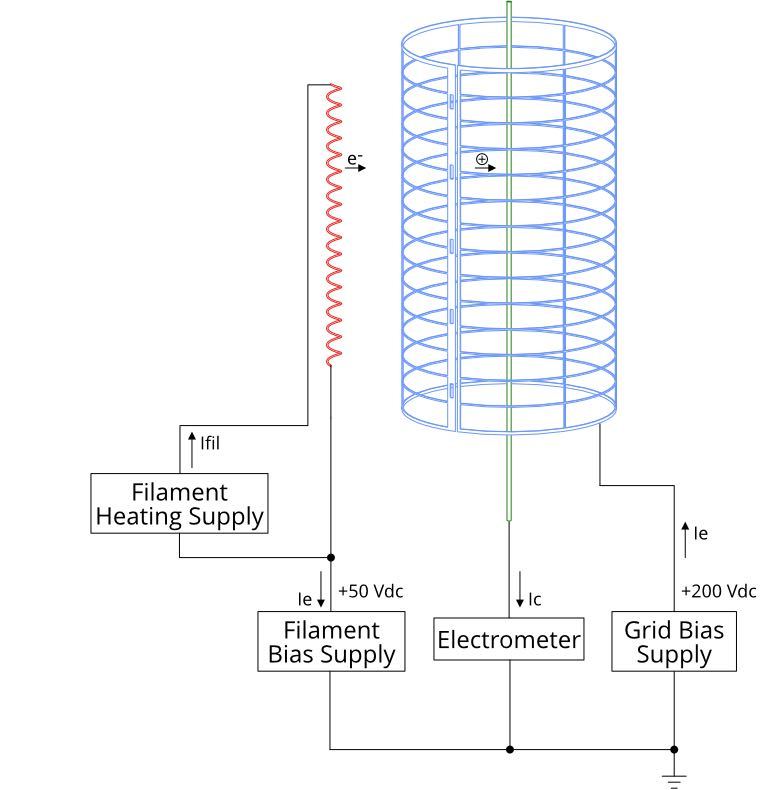
Ionization vacuum gauges are widely used vacuum measurement gauges that use the principle of gas molecule ionization for vacuum measurement. According to the different gas ionization sources, ionization vacuum gauges are divided into hot cathode ionization vacuum gauges and cold cathode ionization vacuum gauges. Hot cathode ionization vacuum gauges include ordinary type, ultra-high vacuum type, and low vacuum type. The working principle of an ionization vacuum gauge is that electrons are emitted from the emitter, accelerated by the accelerating electrode, and collected. The electrons repeatedly move between the accelerating electrode and the collecting electrode, colliding with gas molecules and ionizing them to produce positive ions. By measuring the magnitude of the positive ion current, the gas pressure in the vacuum chamber can be determined.
For vacuum coating machines, using an ionization vacuum gauge allows for the rapid and continuous measurement of the total pressure of the gas to be measured. Furthermore, the ionization gauge tube is small and easy to connect. However, it should be noted that using an ionization gauge at high pressures above 10-1 Pa will reduce the life of the gauge tube or even cause damage, so it should be avoided at high pressures. In addition, when the vacuum system is exposed to the atmosphere or after use for a period of time, the inner surface and electrodes of the ionization gauge tube may adsorb gas, affecting the accuracy of the vacuum measurement, so regular degassing of the gauge tube is required.
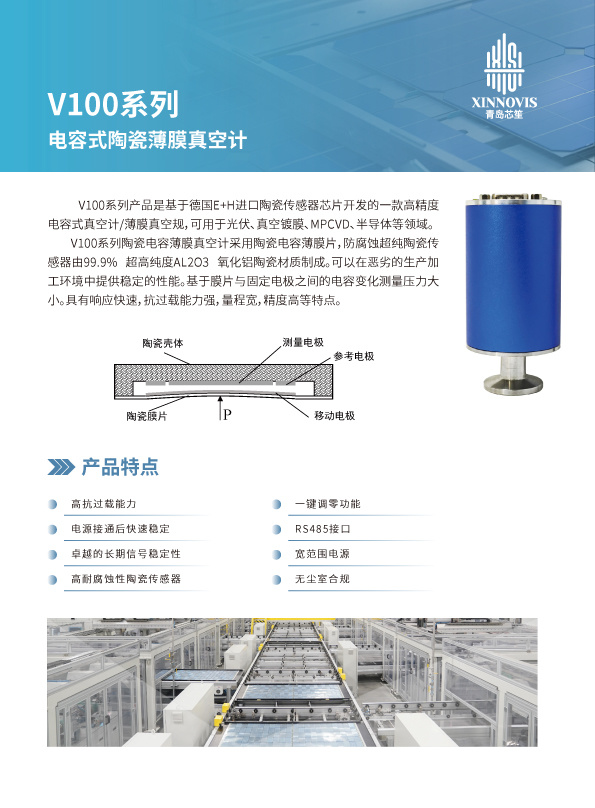
In the field of vacuum coating, the V100 series capacitive ceramic thin-film vacuum gauges independently developed by Qingdao Xinnovis play an important role. The V100 series products are high-precision capacitive vacuum gauges/thin-film vacuum gauges developed based on imported German E+H ceramic sensor chips. They use ceramic capacitive thin films, and the corrosion-resistant ultra-pure ceramic sensor is made of 99.9% ultra-high purity AL203 alumina ceramic material. They can provide stable performance in harsh production and processing environments. Pressure is measured based on the change in capacitance between the diaphragm and the fixed electrode. They feature fast response, strong overload capacity, wide range, and high precision. They can be used in photovoltaic, vacuum coating, MPCVD, semiconductor, and other fields. Qingdao Xinnovis's self-developed V100 series products are undoubtedly the best choice in the industry.
Qingdao Xinnovis Microsystem Technology Co., Ltd. mainly engages in the research, development, production, and sales of high-end gas mass flow meters/controllers, thin-film vacuum gauges, pressure controllers, and other semiconductor core components. Through independent innovation, industry-university-research cooperation, and achievements transformation and industry integration, it has achieved rapid development and contributed to the development of China's semiconductor industry.
Website: http://www.xinnovis.com/
Address: Building B, International Innovation Park, Songling Road, Laoshan District, Qingdao
Service Hotline: 400-006-6550
More News

Tel: 400 006 6550
Office Address: 12F, Building I, International Innovation Park,
177 Songling Road, Laoshan District, Qingdao, Shandong, China