

Why does evaporation coating need to be carried out in a high vacuum environment?
Release time:
10 Jul,2024
Summary
Evaporation coating technology is an important surface treatment technology widely used in various fields such as optics, electronics, semiconductors, and decoration. However, vacuum conditions have a significant impact on the evaporation coating process. This article will delve into why evaporation coating is performed in a vacuum, exploring the various aspects of vacuum's influence on the coating process and film quality.
Thin films, as one form of matter, utilize a wide range of film materials. These can be composed of single elements or compounds, as well as inorganic or organic materials. Similar to bulk materials, thin films can exist in single-crystal, polycrystalline, or amorphous states. In recent years, research on functional thin films and composite thin films has also made significant progress. Coating technologies and thin-film products are widely used in industry, particularly playing a crucial role in the electronics materials and components industries.
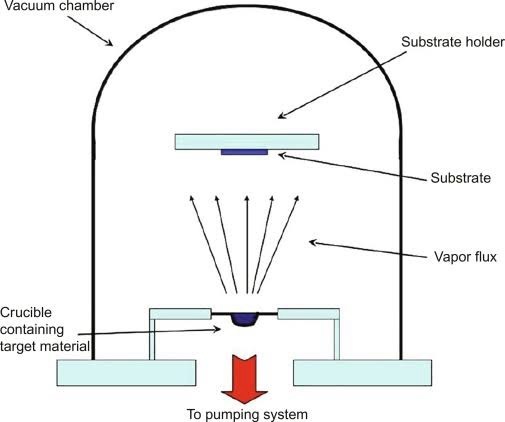
Vacuum evaporation coating includes the following three basic processes:
① The process of heating and evaporation. This includes the phase transition from a condensed phase to a gaseous phase (solid or liquid → gas).
Each evaporating substance has a saturation vapor pressure at different temperatures; during the evaporation of compounds, reactions occur between their components, and some components enter the evaporation space in a gaseous or vapor form.
② The transport process of gasified atoms or molecules between the evaporation source and the substrate, which is the flight of these particles in the ambient atmosphere.
During flight, the frequency of collisions with residual gas molecules in the vacuum chamber is determined by both the mean free path of the evaporating atoms and the distance from the evaporation source to the substrate, a distance often referred to as the source-to-substrate distance.
③ The process of evaporating atoms or molecules depositing onto the substrate surface is vapor condensation, nucleation, and the growth of nuclei into a continuous film.
Since the substrate temperature is much lower than the evaporation source temperature, the molecules deposited on the substrate surface directly undergo a phase transition from gas to solid. The film material is placed in a vacuum coating chamber, and the evaporation source is used to heat and evaporate the film material. After the mean free path of the evaporated molecules exceeds the linear dimension of the vacuum coating chamber, the atoms and molecules in the vapor escape from the surface of the evaporation source and, in the process of flying towards the substrate surface, are rarely hindered by collisions with other particles (mostly residual gas molecules), and can directly reach the surface of the substrate to be coated. Because the substrate temperature is low, they condense on it to form a film. To increase the adhesion of the evaporated molecules to the substrate, the substrate must be heated appropriately. To successfully perform evaporation coating, vacuum conditions are required during evaporation, and evaporation conditions are required during film formation.
Importance of Vacuum Conditions:
① Reduce interference from gas molecules.
At normal pressure, the air contains a high concentration of gas molecules. These molecules frequently collide with particles of the evaporating material, significantly disturbing their directional movement. This results in disordered and uneven particle distribution during coating, making it difficult to uniformly deposit on the substrate surface, leading to uneven film thickness and inconsistent quality.
② Avoid oxidation and contamination.
Oxygen and other gases, when reacting chemically with the evaporating material, can quickly transform into various oxides or different compounds. This not only alters the original properties of the evaporating material but also seriously affects the purity and performance of the film. In a vacuum environment, oxygen and other harmful gases can be effectively removed, avoiding oxidation and contamination, ensuring that the evaporating material maintains its pure state for coating.
③ Improve the mean free path of particles.
Under vacuum conditions, the probability of collisions between particles is significantly reduced due to the low number of gas molecules, leading to a significant increase in the mean free path of particles. As a result, the evaporated material particles can move more freely and smoothly towards the substrate surface, reducing energy loss and directional deviation during transport, thereby significantly improving coating efficiency and quality.
Importance of Vacuum Environment for Coating:
① Influence on evaporation rate.
The vacuum level significantly affects the evaporation rate of the source material. At high vacuum levels, there are almost no gas molecules in the surrounding environment, and the effect of gas molecule collisions on the surface of the evaporation source material is reduced. This allows the evaporation source material to evaporate more quickly and stably, ensuring that the evaporation rate can be accurately controlled. At low vacuum levels, a large number of gas molecules disturb the evaporation process of the source material, making the evaporation rate unstable and fluctuating greatly, seriously affecting the uniformity of the film thickness and the stability of the quality.
② Influence on particle energy and angle of incidence.
In a vacuum, the evaporated material particles can obtain higher energy because they are not hindered or collided by gas molecules. When these high-energy particles reach the substrate surface, they deposit with a more concentrated and directional angle of incidence. This high energy and concentrated angle of incidence are conducive to forming a denser film with stronger adhesion. At the same time, the high energy of the particles also promotes their spreading and fusion on the substrate surface, further optimizing the structure and properties of the film.
③ Influence on the condensation and crystallization process.
A vacuum environment provides more suitable conditions for the condensation and crystallization of the evaporated material. In a vacuum, due to the absence of gas molecule interference, the evaporated material particles can condense and crystallize more freely after depositing on the substrate surface. This is conducive to forming a more regular and ordered crystal structure, improving the crystallization quality of the film. Under normal pressure, the presence of gas molecules may hinder the condensation and crystallization process of the particles, leading to disordered film structure and defect formation.
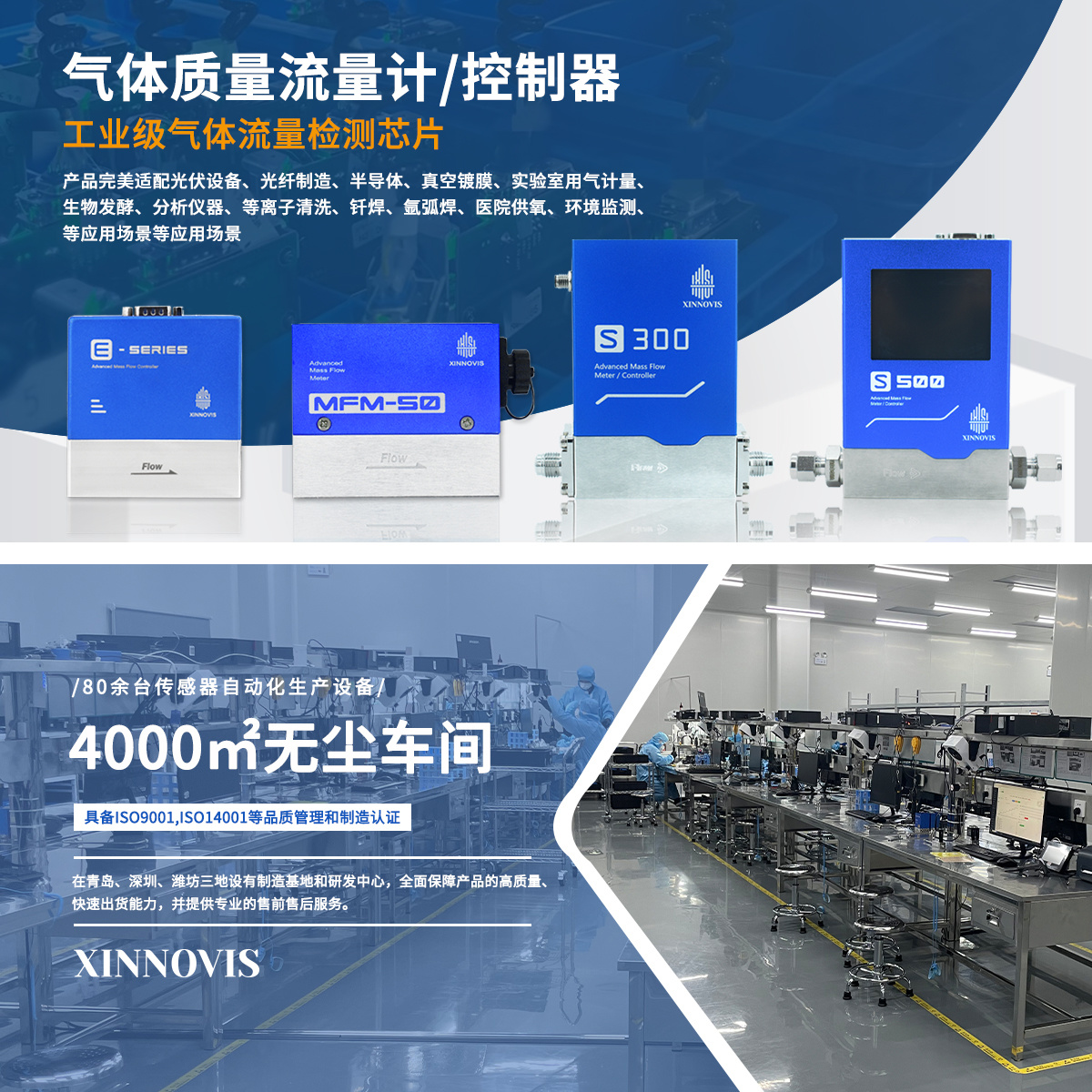
In the pursuit of superior vacuum coating, you need reliable, precise, and efficient gas flow control. Our Mass Flow Controllers (MFCs) are your ideal choice. Xinnovis's MFCs utilize advanced sensing technology and precise flow control algorithms to measure and control gas flow with extremely high accuracy. Rigorous quality control and testing ensure long-term reliability and stability. They provide accurate flow control even under high-temperature, low-temperature, or harsh environmental conditions, ensuring your vacuum coating process remains stable and produces high-quality coating results.
More News

Tel: 400 006 6550
Office Address: 12F, Building I, International Innovation Park,
177 Songling Road, Laoshan District, Qingdao, Shandong, China