

Research on the Design of Advanced Gas Flow Controllers
Release time:
29 Jun,2022
Summary
With increasing global and Chinese attention and investment in the semiconductor industry, the industry has placed higher demands on gas flow controllers. The successful application of new material research technologies such as nano and thin-film technologies provides a good premise for the integration and intelligence of gas flow controllers. MEMS gas flow sensors will be developed based on the comprehensive application of multidisciplinary technologies such as micro-mechanical and microelectronic technology, computer technology, signal processing technology, sensing technology, fault diagnosis technology, and intelligent technology. The development of fully automatic digital intelligent gas mass flow controllers capable of simultaneously monitoring multiple gases will be an important research direction in this field.
Gas mass flow controllers (hereinafter referred to as "MFCs") utilize industrial-grade advanced flow sensor chips, combined with low-pressure loss gas paths, high-precision digital control circuits, and algorithms to achieve high precision, high stability, and wide range control across a wide temperature range. In the field of MEMS flow solution MFCs, American companies like MKS and Dutch companies like Bronkhorst have begun to deploy, and advanced MEMS gas flow measurement and control technology has the opportunity to disrupt traditional capillary-based MFCs. Based on the latest generation of MEMS flow chip technology, with accuracy and reliability superior to traditional capillary technology, it represents a revolutionary technological upgrade.
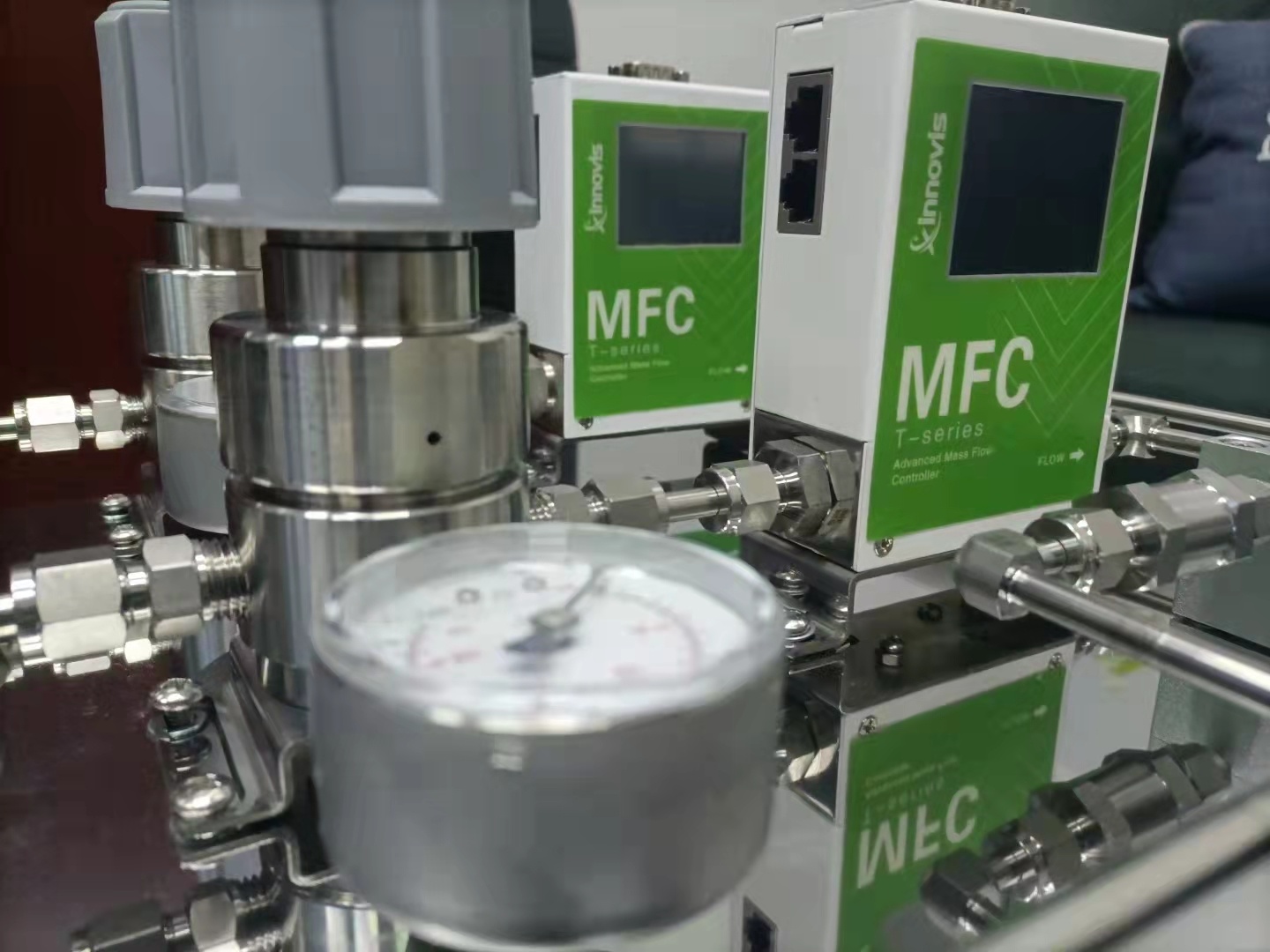
MEMS chips offer higher signal-to-noise ratios, significantly smaller thermal capacitance and thermal response than similar capillary-based products, resulting in faster response speeds and better turndown ratios; thermal capillary-based MFC products have weak anti-pollution capabilities, while MEMS chip-based designs do not experience capillary blockage, and MEMS-based MFCs may even operate without filter screens.
Furthermore, capillary-based MFCs are sensitive to installation position (different horizontal and vertical installations lead to different readings). Test results can be significantly affected by horizontal and vertical installation, while MEMS chip-based MFCs, after confirming the inlet and outlet flow direction, are unaffected by installation orientation, providing a more reliable and applicable product for industrial environments and laboratory gas supply systems.
MFC Research Technology Roadmap: Chip --- Module --- Instrument --- Test
Product Requirements: Research and manufacture MFCs to meet the application needs of high precision, high stability, and fast response in fields such as photovoltaics, semiconductors, and vacuum coating.
Chip Design The chip is based on MEMS technology, with size optimization based on finite element simulation, using a high-sensitivity suspended diaphragm structure, and depositing a semiconductor coating to improve chip reliability.
Flow Path Design Modeling-Simulation. This structure has a differential pressure generating structure similar to an orifice plate in the middle, used to generate sufficient flow in the bypass channel. The flow in the bypass directly affects the sensitivity and detection lower limit of the flow meter. To increase this flow value, it is necessary to increase the pressure difference before and after the bypass channel structure. This internal pressure difference directly affects the pressure loss of the entire flow meter.
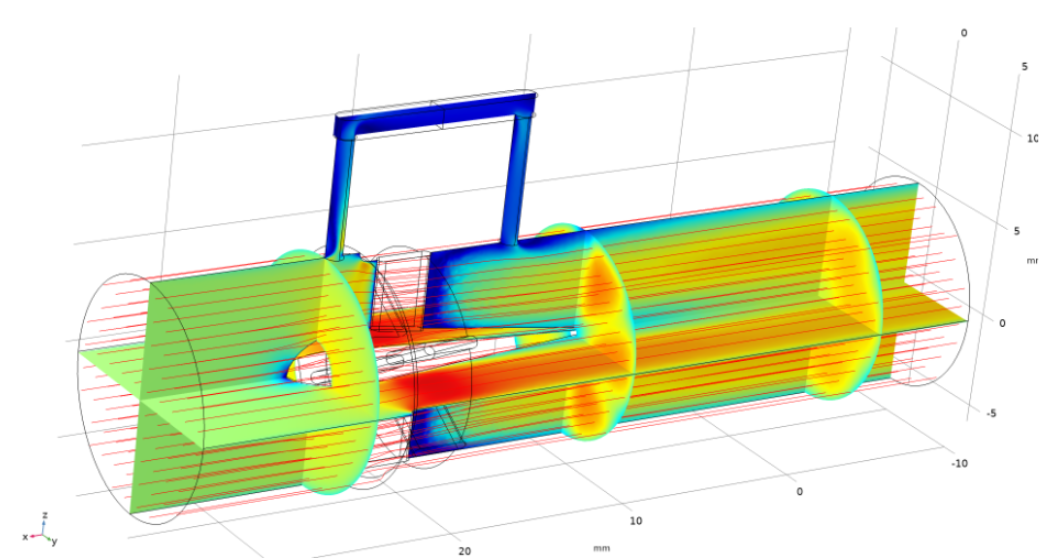 Unlike high-pressure loss flow path designs such as capillary structures or differential pressure structures, a straight-through flow path structure design is used to achieve unprecedented ultra-low differential pressure control.
Mechanical Design Mechanical structure design - Industrial appearance design
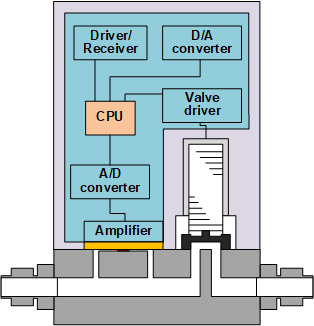 Circuit Design Schematic design - PCB layout - Component specification and parameter confirmation. The channel sub-board collects chip signals, and the main board processes the signals. The above circuits use differential output, low temperature drift, and anti-electromagnetic interference designs;
Program and Algorithm Design Logic part - Single-chip microcomputer program part - Screen function - Debugging stable control - Testing according to different gas paths
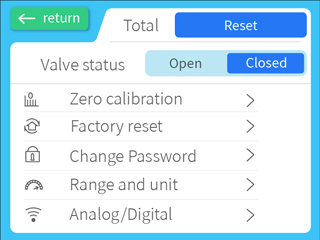 A PID dynamic algorithm is used to achieve stable flow control and fast response.
Assembly, Calibration, and Testing
Assembled in a Class 1000 cleanroom at a temperature of 25±3℃, calibrated and packaged in a Class 10,000 cleanroom to ensure product accuracy. Redesign and integration of different chips and components are involved, including various communication protocols/standards, size, power consumption, and special processes; its research and development requires mastering electronic product technology, integrated circuit technology, chip manufacturing process technology, material properties, substrate design technology, advanced semiconductor packaging technology, and communication technology, only in this way can the performance, size, and manufacturing cost of the system be properly optimized in application.
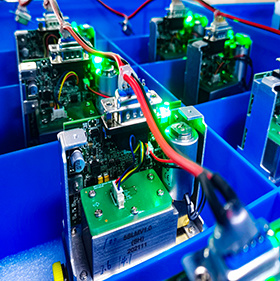
The above figure shows the calibration and testing status of the gas mass flow controller (MFC)
More News

Tel: 400 006 6550
Office Address: 12F, Building I, International Innovation Park,
177 Songling Road, Laoshan District, Qingdao, Shandong, China