

Understanding Flow Meter Pressure Drop in One Article
Release time:
07 Mar,2022
Summary
Flow meter pressure loss
Flow meter pressure loss is one of the key indicators of a flow meter, used to characterize the pressure difference between the input and output ends of the flow meter, and is also the minimum pressure difference to ensure the normal operation of the flow meter. Flow meter pressure loss generally increases with increasing flow rate, and is also affected by the solution, for example, the pressure loss of ultrasonic flow meters and MEMS (Microelectromechanical Systems) flow meters is much smaller than that of vortex flow meters and differential pressure flow meters.
Chinese name: Flow meter pressure loss
English name: Pressure Loss of Flow Meter
Definition: Flow meter pressure loss describes the pressure difference (P1-P2) between the input (P1) and output (P2) ends of the flow meter, and is also the minimum pressure difference to ensure the normal operation of the flow meter. It is one of the basic parameters of the flow meter.
Principle:
A flow meter is an instrument that indicates the measured flow rate and (or) the total volume of fluid over a selected time interval. In general, it converts the flow rate information of gas or liquid into an electrical signal. In the process of converting flow rate information into an electrical signal, it is usually necessary to first convert the flow rate information into heat value change, pressure change, electromagnetic change, and then convert the flow rate information into an electrical signal through a specific sensor. This process will lead to increased pressure loss, which requires the inlet pressure to be greater than the outlet pressure. Figure 1 shows a typical fluid simulation model of a flow meter. The structure in the middle has a pressure difference generating structure similar to an orifice plate, which is used to generate sufficient flow rate in the bypass channel. The flow rate in the bypass directly affects the sensitivity and detection lower limit of the flow meter. In order to improve this flow rate value, it is necessary to increase the pressure difference before and after the bypass channel structure. This internal pressure difference directly affects the pressure loss of the entire flow meter.
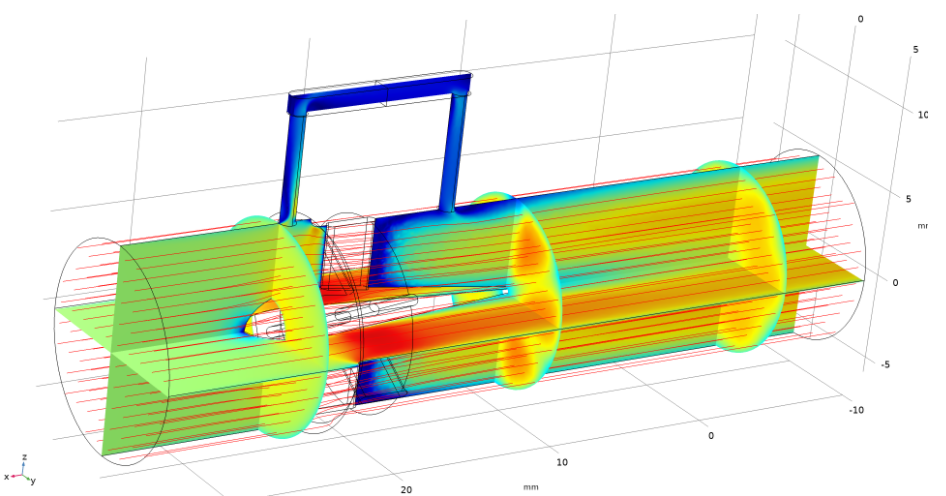
Figure 1: Simulation model of gas mass flow meter.
References
[1] Ji Peng, Meng Jiang, Influence of Key Factors on Pressure Loss of Inner and Outer Pipe Differential Pressure Flow Meter, Coal Mine Machinery, 2015, 36(11)
[2] Xiao Shijin, Development of MEMS Thermal Mass Flow Sensor, Master Thesis, Shandong University, 2021
[3] Hu Guoqing, Tian Wei, A MEMS mass flow controller and control method, CN113157008A
[4] https://www.keyence.com/ss/products/process/flowknowledge/pressure-loss/what_is.jsp
More News

Tel: 400 006 6550
Office Address: 12F, Building I, International Innovation Park,
177 Songling Road, Laoshan District, Qingdao, Shandong, China